-
Custom VENT2MATCH® Engineered Hardwood Floors
Regular price $0.00Regular priceUnit price per -
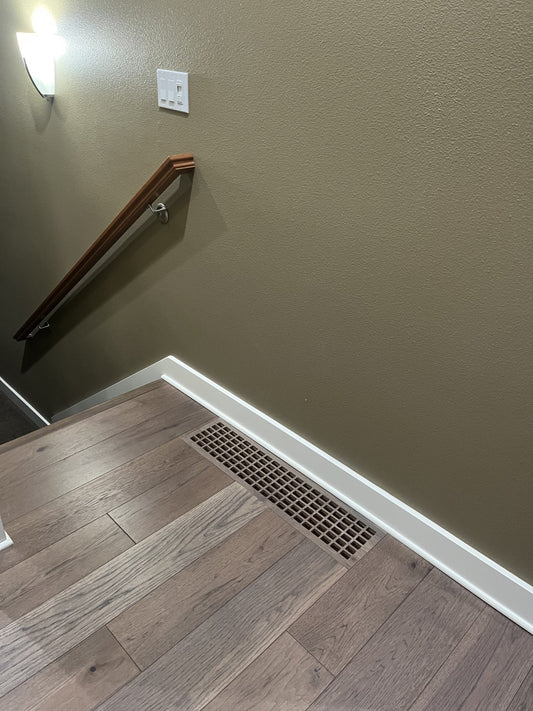
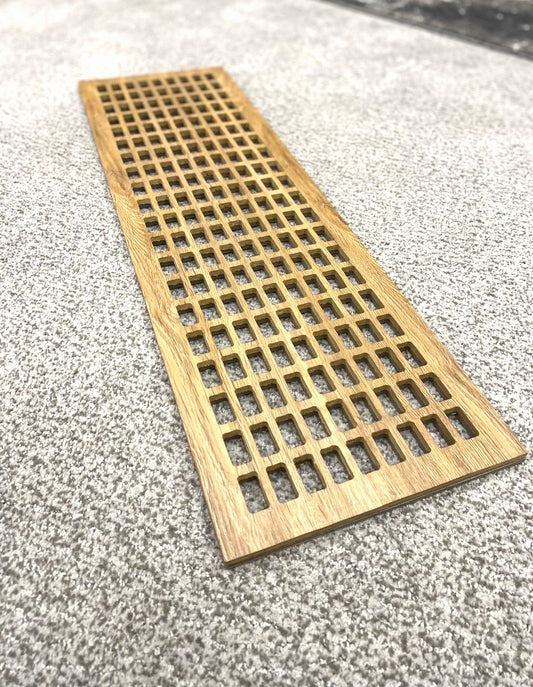
Cold Air Return VENT2MATCH® - Egg Crate Pattern - LVP/LVT
Regular price From $363.00Regular priceUnit price per


Bruce at a glance
- Engineered hardwood lines
- Hydropel: 7/16 in click, float or glue
Parent company: AHF Products. Sold through Bruce dealers and home centers.
Still picking a color? Browse Bruce at Floor City, our partner store.
Getting the fit right
Bruce locks together edge to edge and floats, so the whole floor moves a little with the seasons. Installers normally leave some room around fixed openings. Give us the size of the hole as it was cut, not the size of the old register, so the vent fits what is actually in your floor.
Board thickness is the detail people forget. Bruce is 7/16 inch (Hydropel), and a vent face that is meant to sit flush needs to match that height. A leftover board is the easiest way to measure it.
Engineered hardwood can be nailed, glued or floated, and Bruce is no different from line to line. A nailed floor stays put around the register hole; a floating one moves a hair with humidity. Either way, the measurement we need is the opening.
Bruce vent questions
Does it matter whether my Bruce floor is click or tongue-and-groove?
Not for the vent sizes. It does help us picture the opening, so mention it in your quote request.
My Bruce floor is a few years old. Does that matter?
Wood mellows with light, so an older Bruce floor may not match a new sample. Keep a spare board from your own install if you have one.
Where can I see Bruce colors?
Floor City, our partner store, carries Bruce. Their Bruce page lists current colors.
How thick is Bruce flooring?
7/16 inch (Hydropel), per the manufacturer. Measure a spare board to be sure, since lines differ.
Where do I find my Bruce color name?
The carton label lists the collection and color. Your installer's invoice usually has it too.
From measurement to quote
- Measure the openingPull the old register and measure the hole in the floor.
- Note your Bruce colorCollection, color name and board thickness.
- Request a quoteSend the sizes and details; we reply with pricing.